Chinese medicine puts the emphasis above all on prevention. In old China the doctor was the family's guardian. He made sure that all its members stayed healthy, and that is what he was paid for. That is why he first recommended an appropriate diet, and only for more advanced illnesses did he prescribe herbs or perform acupuncture. The doctor made sure that the life energy Qi flowed properly through his patients' meridians and took care to strengthen the body's resistance, the so-called Wei Qi.
What are Qi, Wei Qi and meridians?
The Chinese distinguish 12 main organs with their corresponding meridians, i.e. the energy channels of our body. They can be compared to blood vessels. Through them flows Qi – the life force, which is of prime importance in Chinese medicine.
Wei Qi, in turn, is the body's protective energy – something like an immune system, a kind of protective cloak. If our Wei Qi is strong, we do not fall ill so often. What is more, with strong Wei Qi we avoid situations that threaten our health or life (e.g. accidents, fights) – we usually find ourselves in the right place at the right time.
There is also Jing, the essence of our energy – our innate, constitutional form of energy. It is created when our parents' cells unite and is shaped during foetal life. According to Chinese medicine, Jing is stored in the kidneys, our energy granary. It is a finite energy that does not regenerate, and the length and quality of our life depend on it. We need to conserve it by leading a balanced lifestyle, so that it lasts us a long time.
Jing energy does not regenerate, but Qi energy does.
We obtain Qi from, among other things, food. That is why a personalised diet is so important – some foods serve us, others we should avoid. This is highly individual.
The second source of Qi (as much as 30%) is air – we obtain it through proper breathing. The Chinese regularly practise tai chi and qigong – exercise combined with breathing. In the mornings whole families exercise in the parks, and hospital patients practise as part of their recovery and rehabilitation. All to stimulate the meridians and harmonise the flow of Qi.
If you have no time for exercise, it is enough to get up 5 minutes earlier and do some simple breathing exercises. They go roughly like this: stand with your feet slightly apart, knees bent, back straight but body relaxed, especially the shoulders. Tuck your tailbone in and place your hands below your navel. As you breathe in, move your hands forward and upward as if stroking the trunk of a tree; when you reach its crown, breathe out and let your arms open to the sides and drop down, palms facing the ground, back to below your navel. This is a great way to stimulate the circulation of energy. Five minutes of these exercises at your own pace and you are energised – no coffee needed.
A short morning walk is also good. Do you take the tram or bus to work? Walk part of the way and get on at the next stop. Take a stroll, breathe. You will have more energy.
What are we doing wrong that we often lack energy and need coffee to recharge in the morning?
Above all, we eat badly. We do not eat in a way that suits the climate we live in or the season. We eat foods that do not give us energy. We think we eat a lot, but in fact we eat nothing, or very little, that provides energy. We fill up on sandwiches or instant meals and, worse still, we use the microwave. And food from the microwave has no Qi at all.
Because Qi is not about calories but about the amount of this energy. If we put a cutlet in the microwave, after heating it has the same number of calories, but it loses its Qi. What is more, when we eat that cutlet, we have to use our own Qi to digest it. That is why, even though we eat, we lack energy, we cannot get out of bed in the morning and we feel tired after lunch.
So how should we eat?
Food that has been cooked for a long time has a great deal of Qi. This is somewhat at odds with our Western dietetics, which says that long cooking destroys vitamins. In Chinese medicine, however, it is not about vitamins but about Qi, which gives power and strength. Note that our grandmothers did much the same – they cooked broth on the fire for the sick. Such broth stood on the stove for several hours and was served to weakened people precisely to strengthen them.
According to Chinese medicine, meals should in fact be cooked over a flame. Food prepared this way is more energising than food cooked on an induction or electric hob. Besides, warm meals are digested much better. All of this adds energy.
Should we avoid raw foods?
Especially in autumn and winter, let us try not to eat raw foods, because they cool the body. The Chinese classify food according to the five elements and its thermal nature. This means that some foods are warming and others cooling – lettuce and most fruit, for example, cool the body. So avoid too much raw food. One raw apple a day is fine. Raw carrots are good to eat in summer; in winter it is better to cook them.
What else should we pay attention to?
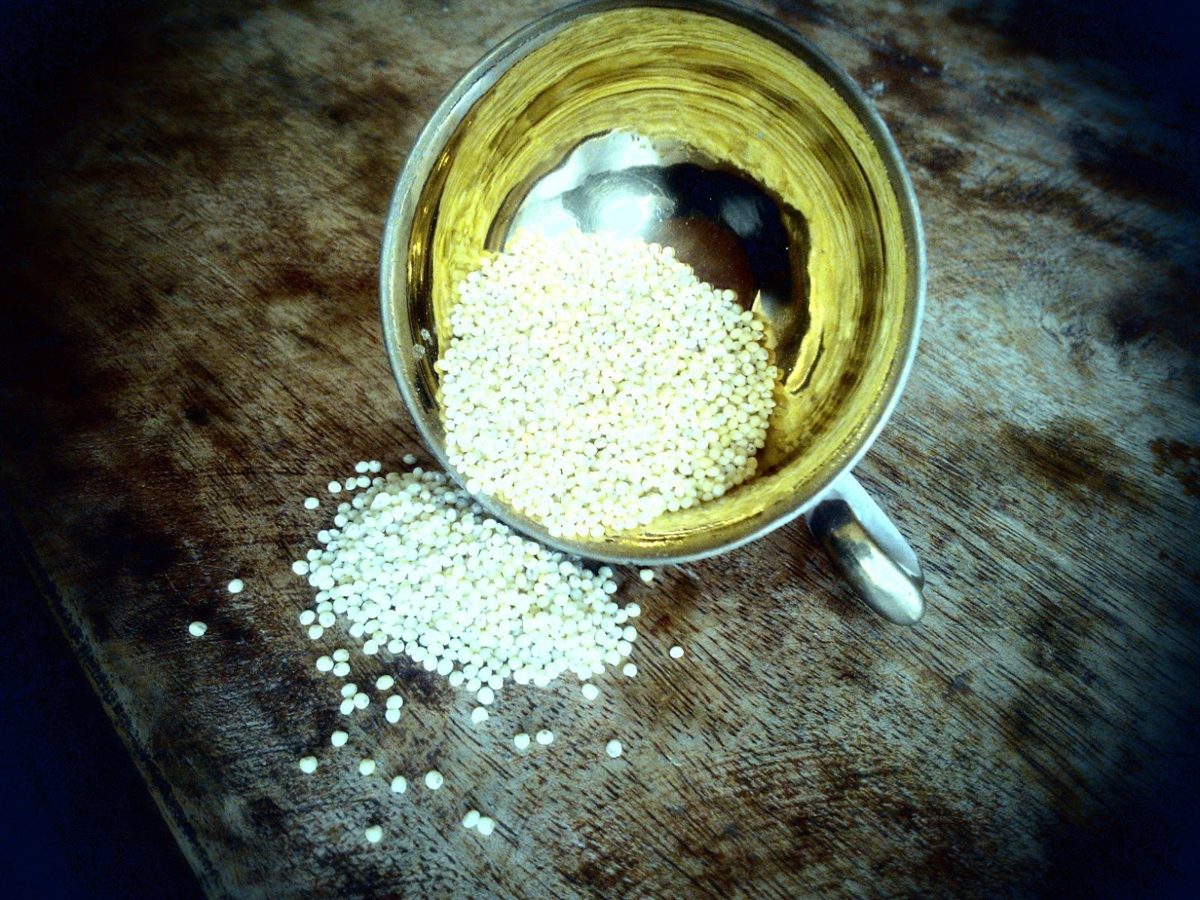
The most important meal of our diet is breakfast. It too should be warm: porridge, some kind of grain, for example with dried fruit and nuts, or even soup. For breakfast you can even eat what you would have for lunch – broth, for instance. It warms you up and gives you energy. Avoid sugar and too much meat.
The body likes it when we eat at regular times. Meals should be adapted not only to the season but also to the latitude we live in. Oranges do not grow in Poland – we have apples, pears and plums. So we eat our local fruit. When we travel south, we eat oranges there. In Africa we eat bananas. That is how it works.
It is extremely important that our body and mind regenerate best between 9 pm and 1 am. It is worth going to bed earlier so that we wake up in the morning full of energy for the whole day.
That is difficult, especially for "night owls" who function best late in the evening, or for those who work shifts.
Chinese medicine does not divide people into owls and larks. The Chinese always said that you should go to sleep when the sun sets and wake up when the sun rises. So in winter, when it is dark for a long time, we sleep longer. In summer, when the nights are short, we sleep less. We must live in harmony with nature and respect the times of day and the seasons. It is therefore best to take your holiday in winter, because that is when we need rest the most and should conserve our energy the most.
We also have a body clock, and we should follow it too. At different times of day our organs reach their energy peak, when they are most active. A few examples: the lungs peak between 3 and 5 am. That is when the day begins in Chinese medicine. People with lung problems may, for example, wake up at this time with a cough or with the need to put cream on their hands because they are dry (in Chinese medicine the skin is closely linked to the lungs). From 5 to 7 am is the peak of the large intestine – the best time to empty your bowels. Between 7 and 9 am the stomach peaks, and that is the best time to eat breakfast.
The next two hours, between 9 and 11 am, are the time of greatest activity of the spleen, which in Chinese medicine is responsible for transforming food digested by the stomach into the right kind of energy – energy that gives us the strength to work, learn and so on. That is why it is so important to eat breakfast at the right time, so that the spleen then has material to transform matter (here: food) into energy.
Between 11 am and 1 pm the heart is most active. Drinking coffee at this time is a terrible idea, because it mobilises the heart even more and exhausts it. In the evening, between 7 and 9 pm, the stomach is at its minimum – so we do not eat after 7 pm, because the food will not be digested properly anyway.
Rest is extremely important for regenerating our energy. It is enough to spend 15 minutes a day resting in silence, alone with yourself (it can even be an afternoon nap), and we will feel the effects almost immediately. We will notice that we have more energy and feel stronger straight away.
Let us avoid negative emotions – they drain our energy and make us ill.
Western doctors hardly pay attention to this, but in Chinese medicine it is believed that if we do not deal with negative emotions and do not work on them, therapy will stand still.
And let us look after our Jing – this energy is our reserve for life. We use it up day by day. Let us not destroy it with negative emotions, bad food or sleepless nights. Because if we do not respect it, it will soon run out, and we will either die earlier or live in illness.
Following these principles keeps us fresh and full of energy.
You will not need your morning coffee any more – except, perhaps, for pleasure…
Based on an interview by Onet with Dr Karolina Kubas, who specialises in acupuncture, diet therapy and herbal medicine.
This article is for information and education only and does not replace medical advice. Please consult a doctor about any health problem. Legal notice.