
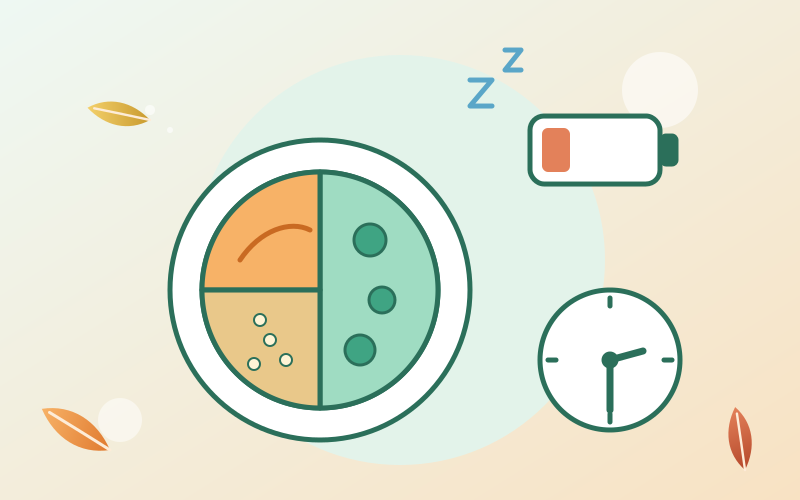
It is 2:30 pm. Lunch is over and you feel as if someone has pulled the plug: heavy eyelids, a foggy head, irritability and a sudden craving for coffee or something sweet. Many people see this as a normal “dip” or as their own laziness. Yet regular, strong sleepiness after meals is often a silent metabolic alarm – a sign that the body is finding it harder and harder to handle the sugar from food. One of the most common causes is insulin resistance.
This is no longer a problem only of older people or those who are very overweight. It increasingly affects people in their 20s and 30s, and with age it changes its face – differently in women and in men. In this article I show how insulin resistance looks at different stages of life and what you can do to get steady energy back.
Important: a slight energy dip after lunch can be physiological – we have a natural circadian low between 1 and 3 pm. What should worry you is strong, daily sleepiness, hunger attacks and irritability a few hours after eating. Insulin resistance is not a separate disease, but a state that may precede prediabetes and type 2 diabetes – so it needs proper testing and cooperation with a doctor. This article does not replace medical advice.
What is insulin resistance – in three sentences
Insulin is a hormone that "opens" muscle, liver and fat cells so they can take in glucose from the blood. With insulin resistance the cells respond to it less well, so the pancreas has to produce more and more of it to keep blood sugar normal. For years glucose results can look fine while insulin levels are already clearly raised – and it is the insulin that drives many symptoms: sleepiness, hunger, fat stored around the belly and mood swings.
Insulin resistance and sex – why women and men react differently
Women: sex hormones and the stress axis
- Oestrogens are protective – they improve insulin sensitivity and favour storing fat on the hips and thighs (subcutaneous fat) rather than the belly. That is why young women are statistically more insulin-sensitive than men of the same age.
- Progesterone in the second half of the cycle lowers this sensitivity slightly – which is why many women crave sweets before their period.
- Cortisol – the stress hormone – raises blood glucose. Women often live with the chronic stress of many roles, and a disturbed stress axis can unsettle blood-sugar control even in slim people.
- Insulin resistance is strongly linked to polycystic ovary syndrome (PCOS) – it is present in a large proportion of women with this diagnosis and worsens cycle problems, acne and excess hair growth.
Men: visceral fat, testosterone and muscle
- Men store visceral fat – around the abdominal organs – more easily. This is metabolically active tissue that releases pro-inflammatory substances and puts direct strain on the liver. The famous "beer belly" or "executive belly" is often a metabolic belly.
- Testosterone and insulin resistance affect each other: low testosterone favours visceral fat gain and muscle loss, while abdominal obesity and insulin resistance lower testosterone. A vicious circle forms.
- Skeletal muscle is the body's largest glucose "store" – most of the sugar from a meal ends up there. Men have more of it but also lose it faster with a sedentary lifestyle, which strongly affects metabolism with age.
A guide through the stages of life – how insulin resistance changes its face
Ages 20–29: laying the foundations
Women
- Restrictive diets and yo-yo dieting – long fasts alternating with "rewarding yourself" with food unsettle appetite and hormones.
- Irregular meals – no breakfast, then a big, carb-heavy lunch and evening snacking.
- First cycle problems, acne, hair loss – sometimes the first signs of PCOS and insulin resistance.
- Sugar cravings, especially in the afternoon and before a period.
Men
- Fast food and eating on the go – lots of white flour, fat and salt, few vegetables.
- A sedentary lifestyle – computer work, gaming, commuting by car.
- Hidden calories in drinks – sugary sodas, energy drinks, beer and cocktails at parties.
- The first kilos "around the belly", easy to dismiss.
Ages 30–39: career peak and the after-lunch slump
Women
- Office work and chronic stress combined with caring for children and the home.
- Tiredness masks insulin resistance – sleepiness, brain fog and irritability are explained away as "just being overworked".
- Eating the children's leftovers, coffee instead of breakfast, a sweet snack "for energy" at 3 pm.
- After pregnancy: a history of gestational diabetes is a clear sign of higher future risk.
Men
- The "executive belly" – a growing waistline with relatively slim arms and legs.
- Work stress, long hours, too little sleep.
- Quick carb-based meals on the run – a sandwich, pizza, pasta from the canteen, followed by a sharp "crash" during afternoon meetings.
- More frequent snoring and sleep apnoea – which themselves worsen insulin resistance.
Ages 40–49: the hormonal revolution
Women
- Perimenopause – fluctuating and gradually falling oestrogen means fat starts to settle on the belly, even without any change in diet.
- Lower insulin sensitivity, mood swings, hot flushes, poorer sleep.
- Growing leptin resistance – the satiety hormone works less well, so appetite is harder to control.
- A common feeling: "I eat as I always did, but I'm putting on weight".
Men
- Andropause – a gradual fall in testosterone, less energy and motivation, slower recovery.
- A natural decline in insulin sensitivity and loss of muscle mass without strength training.
- A rising risk of fatty liver, high blood pressure and lipid disorders.
Older age: metabolic remodelling and protecting health
Women
- After menopause the protective effect of oestrogens disappears – the risk of metabolic syndrome rises, and visceral fat accumulates in a similar way to men.
- A greater burden on the cardiovascular system: blood pressure, cholesterol, heart disease risk.
- Often at the same time: osteopenia, less activity and a lower appetite for protein.
Men
- Progressing sarcopenia – losing muscle mass and strength means less room to "store" glucose.
- Less physical activity (joint pain, chronic illnesses) strongly worsens insulin resistance.
- Many medicines and coexisting conditions – so every change should be agreed with a doctor.
Why does the after-lunch energy drop hit us hardest?
Reactive hypoglycaemia – the post-lunch rollercoaster
A lunch with a high glycaemic load – e.g. white pasta, potatoes, dumplings, pizza, plus a sweet dessert or juice – makes glucose rise quickly. With insulin resistance the pancreas responds with a delayed but excessive insulin release. The result?
- 30–60 minutes after the meal – high sugar and high insulin, a feeling of heaviness and sleepiness.
- 2–4 hours after the meal – glucose falls faster and lower than it should. Shakiness, irritability, brain fog, poor concentration and ravenous sugar cravings appear.
- We reach for coffee and something sweet – and the rollercoaster starts again.
A tired liver and an overloaded pancreas
- The liver stores glucose and regulates its level between meals. With fatty liver (increasingly common even in people in their 30s) it responds less well to insulin and can keep "adding" glucose to the blood even after eating.
- The pancreas of a 20-year-old usually keeps up with insulin production – so symptoms are mainly about energy. In people in their 40s and 50s, after years of overproduction, its reserve shrinks – and raised fasting glucose and prediabetes appear more often.
- In older people there is also less muscle mass, so even a moderate lunch can cause higher glucose spikes.
A dietary strategy matched to your metabolism
The ideal plate
- ½ plate – vegetables (raw, cooked, fermented) – fibre slows sugar absorption and feeds good gut bacteria.
- ¼ plate – protein: fish, eggs, poultry, legumes, tofu, cottage cheese.
- ¼ plate – complex carbohydrates: buckwheat, millet, pearl barley, brown rice, wholegrain pasta cooked al dente, sweet potatoes.
- A spoonful of healthy fat: olive oil, cold flaxseed oil, avocado, nuts, seeds.
- Desserts and sugary drinks – not straight after lunch "on top", and ideally rarely.
Women: stabilising the hormonal axis
- Don't starve yourself – long gaps and drastic diets increase stress and hunger attacks. 3–4 regular meals with protein work better.
- A protein-and-fat breakfast (eggs, cottage cheese with vegetables, porridge with nuts and seeds) instead of coffee alone.
- In the second half of the cycle and in perimenopause, focus on more protein and vegetables, less sugar and alcohol.
- Calcium, protein and strength training after 40 protect both bones and metabolism.
Men: reducing visceral fat and protecting muscle
- Enough protein at every meal – especially after 40 and 60, to defend muscle (in older adults usually about 1–1.2 g per kg of body weight, provided the kidneys are healthy – check with your doctor).
- Limit alcohol – beer and cocktails are "silent calories" that directly burden the liver and favour visceral fat.
- Less white flour and take-away portions, more vegetables and whole grains.
- Waist circumference is a simple progress marker – measure it once a month.
Food sequencing
This is one of the simplest and best-studied tricks: eat vegetables first, then protein and fat, and carbohydrates last. In studies this order clearly lowered the post-meal glucose and insulin spike compared with eating the same foods in reverse order. In practice: start lunch with a salad or vegetable soup, then meat or fish, and finish with potatoes or grains.
Natural methods: movement, herbs and sleep
A 15-minute walk after meals – the simplest "medicine"
Working muscles take up glucose from the blood even without insulin. That is why even a short walk right after a meal clearly flattens the post-meal sugar spike – in studies of older adults, three 15-minute walks after meals improved glucose control more than one longer walk during the day.
- Younger people: a brisk walk, stairs instead of the lift, a few squats.
- Busy people: a 10–15-minute walk after lunch, or taking a phone call "standing and moving".
- Older people: a gentle walk at your own pace, even around the flat or a corridor; standing up from a chair several times in a row. Regularity matters more than intensity.
Add strength training 2–3 times a week (also with resistance bands or bodyweight) – muscle is your best ally against insulin resistance at any age.
Herbs and spices
- Ceylon cinnamon – in some studies it modestly lowered blood glucose. Choose Ceylon rather than cassia – the latter contains a lot of coumarin, which in excess strains the liver.
- White mulberry (leaf) – contains compounds that slow the breakdown of carbohydrates in the gut; in studies it reduced the post-meal glucose spike. Usually taken as an infusion or extract before meals.
- Berberine – a substance from barberry and other plants; in clinical studies it lowered glucose and improved the lipid profile. But it is a potent compound: it can cause gut complaints, interacts with many medicines and is not for pregnant or breastfeeding women. Use it only after a consultation.
Note: if you take metformin, insulin or other glucose-lowering medicines, herbs and supplements can strengthen their effect and cause hypoglycaemia. Always tell your doctor what you are taking.
Sleep and cortisol
- Just one or two nights of short sleep reduce insulin sensitivity in healthy people. Aim for 7–9 hours of regular sleep.
- Chronic stress keeps cortisol high, and cortisol raises blood sugar. Helpful: diaphragmatic breathing, a walk during the day, fewer screens in the evening, dinner 2–3 hours before bed.
- Snoring and breathing pauses at night (especially in men over 40) call for testing for sleep apnoea – treating apnoea also improves metabolism.
Targeted supplements supporting the mitochondria
Supplements cannot replace your plate, movement and sleep – but matched to your needs they can genuinely support metabolism. These are the substances I consider most often (always after reviewing test results and medicines):
- Myo-inositol – particularly useful for women with PCOS and cycle problems; in studies it improved insulin sensitivity and ovulation regularity.
- Magnesium – deficiency is common in people with insulin resistance; it takes part in hundreds of enzymatic reactions, including glucose metabolism. Best in a well-absorbed form (e.g. citrate, glycinate).
- Omega-3 fatty acids (EPA, DHA) – anti-inflammatory and triglyceride-lowering; they support the heart, which is especially important after menopause and in men with a metabolic belly.
- Alpha-lipoic acid (ALA) – an antioxidant supporting the mitochondria; in some studies it improved insulin sensitivity. It can lower blood sugar, so caution is needed with diabetes medicines.
- Chromium – can help with strong sugar cravings, although research on its effect on glucose is inconsistent.
- Vitamin D – deficiency is very common in Poland and is linked to poorer metabolism; the dose should be matched to your test result.
Summary: insulin resistance is not a sentence, but a signpost
- Daily, strong sleepiness and brain fog after lunch can be a sign of insulin resistance – it is worth checking.
- Women and men experience insulin resistance differently: in women sex hormones and stress are key, in men visceral fat, testosterone and muscle.
- Insulin resistance changes its face with age – from restrictive diets and fast food in your 20s, through stress in your 30s and the hormonal revolution in your 40s, to sarcopenia and cardiovascular risk in older age.
- The most effective tools are simple: a plate with vegetables and protein, the right eating order, a walk after meals, strength training, sleep and a calmer mind.
Your body is not lazy – it is talking to you in the language of tiredness. The after-lunch "wall" is an invitation to stop and check what is happening with your metabolism before diabetes appears. The good news is that at any age – for women and men alike – insulin resistance responds very well to lifestyle change. Often within a few weeks what you miss most comes back: a clear head and energy that lasts until the evening.
Consultation and testing – naturopath in Wrocław
Do you suspect insulin resistance? At Gabinet Zdrowia in Wrocław I will help you:
- choose and discuss tests: an oral glucose tolerance test with insulin, the HOMA-IR index, HbA1c, lipid profile, liver tests, vitamin D,
- assess body composition and visceral fat,
- create an individual nutrition and supplement plan – taking into account your sex, stage of life, medicines and daily rhythm.
If the results point to prediabetes or diabetes, I will refer you to a doctor and support the treatment on the lifestyle side.
👉 Book a visit online or call: +48 501 748 753.
This article is for information and education only and does not replace medical advice. Please consult a doctor about any health problem.