
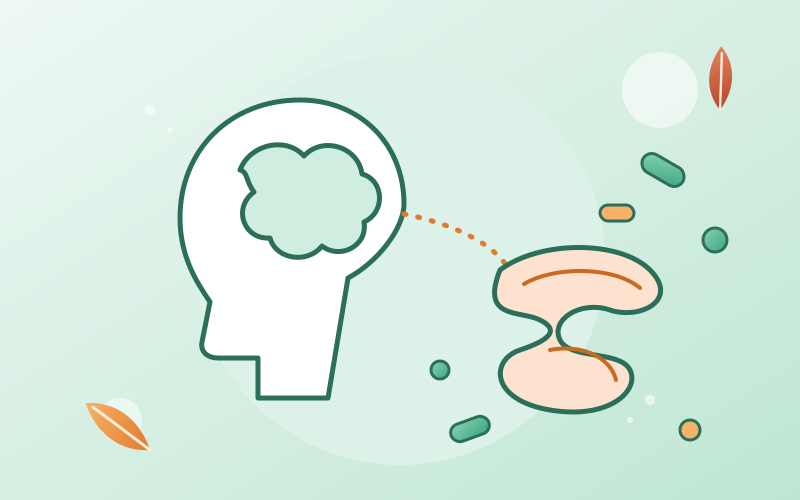
“Butterflies in my stomach”, “my stomach is in knots”, “a gut feeling” – language has long known what science has only confirmed in the last fifteen years or so: the gut and the brain are in constant dialogue. A growing body of research shows that the state of the gut microbiome may influence mood, anxiety levels, sleep quality and resilience to stress.
In this article I explain how the gut-brain axis works, why autumn and winter are particularly hard on it, and what you can do today to support your gut – and through it, your wellbeing.
Important: depression, anxiety disorders and other mental health problems require care from a doctor or psychotherapist. Do not stop any medication without consulting your doctor. Looking after your gut is a valuable complement to treatment, not a substitute for it.
The gut-brain axis – how does it work?
The vagus nerve – a “motorway” between belly and head
The gut and brain are connected above all by the vagus nerve (cranial nerve X). Interestingly, most of its fibres carry information from the gut to the brain, not the other way round. The brain constantly “listens” to what is happening in the digestive tract: whether there is inflammation, which substances bacteria produce, whether digestion is calm.
Besides the vagus nerve, communication also takes place via:
- the immune system – about 70% of immune cells are located around the gut,
- stress hormones (the hypothalamic-pituitary-adrenal axis, cortisol),
- bacterial metabolites, e.g. short-chain fatty acids (butyrate, propionate, acetate).
Serotonin and GABA – what does the gut really produce?
You often read that “90% of serotonin is made in the gut”. That is true – about 90% of the body's serotonin is produced by gut cells (enterochromaffin cells), and gut bacteria influence this production. It is worth knowing, however, that serotonin from the gut does not pass directly into the brain – it mainly regulates gut motility, secretion and blood clotting. Its effect on mood is indirect: via the vagus nerve, the immune system and the availability of tryptophan, from which the brain makes its own serotonin.
Some bacteria (including Lactobacillus and Bifidobacterium species) can also produce GABA, the main calming neurotransmitter. Animal studies show this may affect the brain via the vagus nerve; in humans this mechanism is still being researched.
Dysbiosis, gut permeability and inflammation
When the balance of gut bacteria is disturbed (dysbiosis) – for example by antibiotics, chronic stress, a low-fibre diet, alcohol or lack of sleep – the permeability of the gut barrier may increase. More bacterial fragments (such as lipopolysaccharides, LPS) then reach the bloodstream, stimulating the immune system and sustaining chronic low-grade inflammation.
Some people with depression have raised inflammatory markers, and inflammation can affect the brain – lowering motivation, energy and the ability to feel pleasure. This is one reason why the gut is an important part of a holistic approach to mental health.
Why is it harder in autumn and winter?
Less sun, less vitamin D3
From October to March in Poland the skin makes practically no vitamin D from sunlight. Vitamin D helps maintain the integrity of the gut barrier and regulate immunity, and in studies its deficiency is associated with lower mood. It is worth testing your 25(OH)D level and supplementing according to recommendations (ideally after a consultation).
Fewer vegetables, fewer prebiotics
In winter we usually eat fewer fresh vegetables and fruit and more bread, sweets and ready meals. That means less prebiotic fibre – food for the “good” bacteria that produce butyrate, which nourishes gut cells.
Stress, cortisol and insomnia
Short days, less movement and more work are a recipe for chronically raised cortisol and poorer sleep. Research shows that stress and lack of sleep can change the composition of the microbiome and weaken the gut barrier – and a weaker gut in turn increases vulnerability to stress. A vicious circle.
Women, men and different stages of life
Women of reproductive age – the estrobolome
The estrobolome is a group of gut bacteria that influence the metabolism of oestrogens (among other things through the enzyme beta-glucuronidase). When the microbiome is disturbed, this can change the amount of oestrogen circulating in the body. In some women constipation, bloating and dysbiosis go hand in hand with worse PMS symptoms, mood swings and anxiety before a period. Regular bowel movements and a high-fibre diet are the foundation.
Women after menopause
Falling oestrogen levels are associated with changes in the microbiome – studies point, among other things, to reduced diversity. Many women at this stage report insomnia, “brain fog”, low mood and digestive problems. Caring for the gut, sleep and healthy fats in the diet is especially important then.
Men
Men more often dismiss gut symptoms – bloating, irregular bowel movements or heartburn are considered “normal”. In men, chronic stress more often takes the form of irritability, explosiveness and anhedonia (loss of joy in things that used to bring pleasure) than typical sadness. Remember that these can also be signals to take care of yourself – including your gut.
A practical protocol: how to support your gut and mood
1. Fermented foods – every day, in small amounts
Sauerkraut, fermented cucumbers, beetroot kvass, kefir, natural yoghurt, kimchi. Start with 1–2 tablespoons a day and increase gradually. Choose naturally fermented, unpasteurised products, not pickles made with vinegar.
2. Resistant starch
This is a type of starch that is not digested in the small intestine and becomes food for butyrate-producing bacteria. You will find it in:
- cooked and cooled potatoes, rice and grains (they can be reheated afterwards),
- slightly green bananas,
- pulses and oat flakes.
3. Fibre and plant diversity
The goal is about 25–35 g of fibre a day and as much plant diversity as possible – research suggests that people who eat around 30 different plants a week (vegetables, fruit, grains, nuts, seeds, herbs, spices) have a richer microbiome. Especially valuable are onion, garlic, leek, chicory, Jerusalem artichoke, linseed and psyllium.
Naturopath's tip: for one week, write every plant you eat on a note on the fridge – every spice and herb counts too. Most people are surprised how little variety their diet has… and how easy it is to change.
4. Psychobiotics – targeted strains
Psychobiotics are probiotics for which research suggests an effect on mental wellbeing. The best studied is the combination of Lactobacillus helveticus R0052 and Bifidobacterium longum R0175 – in clinical trials it reduced perceived stress and anxiety symptoms in some participants. The effects are moderate and individual, and probiotics act in a strain-specific way – so what matters is the specific strain, not just the species name.
It is best to choose a probiotic individually. People with weakened immunity, serious illness or taking medication should discuss supplementation with their doctor.
5. Lifestyle – without it diet is not enough
- sleep 7–9 hours at regular times,
- movement – a daily walk, ideally in daylight,
- calming techniques – diaphragmatic breathing, which stimulates the vagus nerve (e.g. an exhale longer than the inhale: 4 seconds in, 6–8 seconds out),
- limiting alcohol, sugar and ultra-processed food,
- eating calmly – without your phone, chewing thoroughly.
The key message
If you are struggling with low mood, anxiety or insomnia, do not stay alone with it – talk to a doctor or psychotherapist. At the same time it is worth taking a broader view: a well-cared-for gut can be an important ally in regaining balance. Treating the nervous system and supporting the gut are not mutually exclusive – the best results come from combining both approaches.
Summary
- The gut and brain communicate via the vagus nerve, the immune system, hormones and bacterial metabolites.
- Dysbiosis and inflammation can affect mood, anxiety and sleep.
- In autumn and winter the microbiome is weakened by vitamin D deficiency, little fibre, stress and poor sleep.
- Women and men of different ages may experience these links differently.
- Daily practice: fermented foods, resistant starch, plant diversity, a well-chosen probiotic, sleep and movement.
Consultation at Gabinet Zdrowia in Wrocław
Would you like to find out what condition your gut is in and what may be affecting your wellbeing? During a naturopathic consultation in Wrocław we discuss your diet, lifestyle, symptoms and test results, and then prepare an individual gut support plan – with diet, probiotic selection and changes to your daily habits.
Book a visit online or call: +48 501 748 753.
This article is for information and education only and does not replace medical advice. Please consult a doctor about any health problem.