Alongside the Christmas tree, a must in every home's festive decorations.
Our ancestors regarded it as a magical plant that brings good luck and protects against misfortune. They hung a bunch above the Christmas Eve table, above the front door and above the hearth.
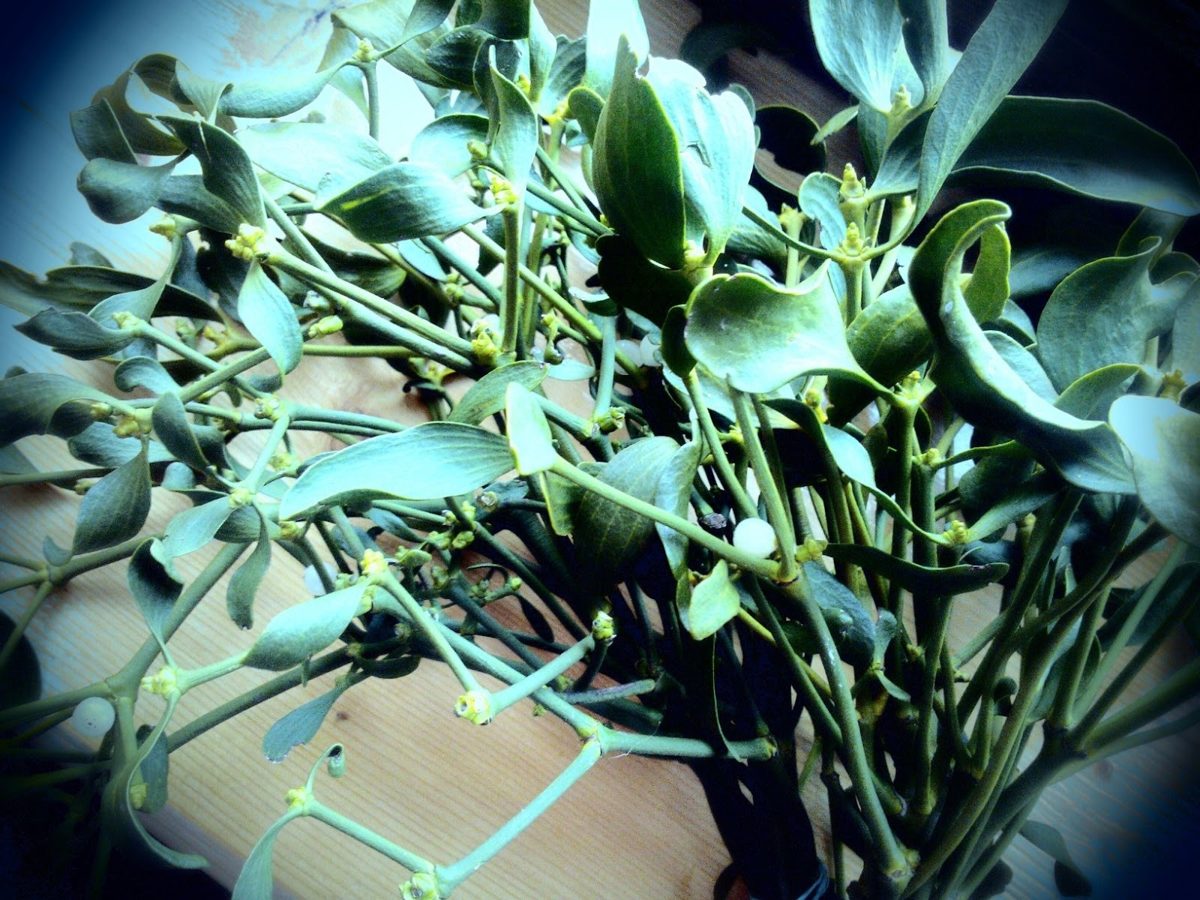
According to magi and priests from different parts of the world, it was a gift from the gods with great power to do good – growing between heaven and earth, it has leaves but no roots, it is not harmed by frost or snow, and when picked and dried it takes on a golden colour. For thousands of years, many peoples regarded it as a symbol of immortality, rebirth and wisdom. In Scandinavia it was called the golden bough, because, gathered at the winter solstice and kept until the summer solstice, it was supposed to show the way to treasure buried in the earth. In Senegal mistletoe was called "the shield", because there it was a talisman protecting warriors from blows in battle.
Mistletoe above the table brings good fortune to everyone at the feast, protects against material losses and brings prosperity. All the wishes exchanged beneath it while sharing the Christmas wafer gain the power to come true if they are truly sincere, and kisses strengthen warm bonds. It was also said to help the unhappily in love – all you had to do was break off a sprig, attach it at the first new moon after Christmas Eve to the door of your beloved and leave it there until the full moon, then take it and wear it close to your heart, so that the object of your affection would return your love just as passionately…
A bunch fixed above the door will keep out evil forces and illness, and will also stop ill-wishers from crossing your threshold. Unless, of course, you want to win over an enemy – then it is good to invite them in and embrace them under the mistletoe, or at least shake their hand: the magic of the golden bough will soften even the most embittered heart.
It is also good to put a leaf picked from it in your wallet. It will be a talisman protecting its owner from theft and extravagance. And a Christmas Eve sprig taken on a journey will keep you safe from accidents.
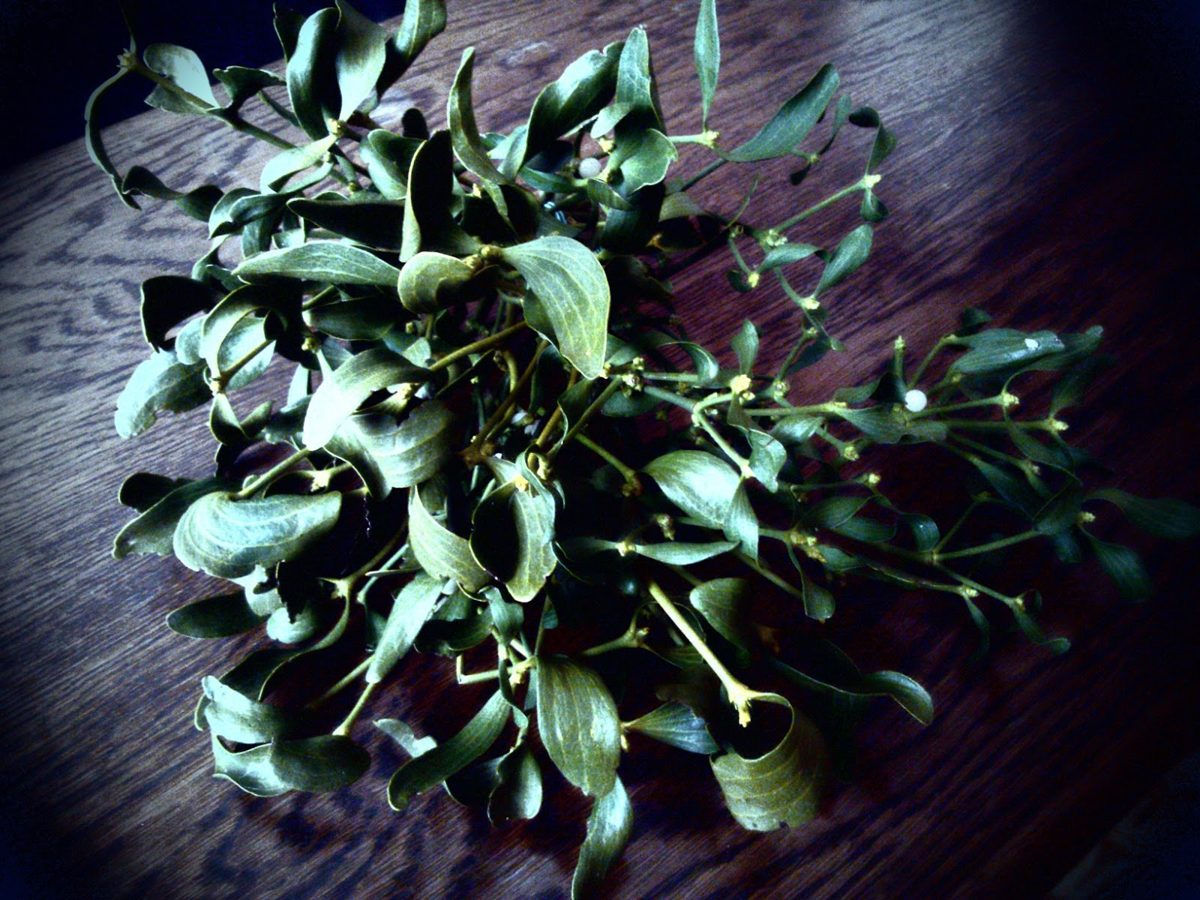
Mistletoe hung above the hearth protects the house from fire and lightning – just break off 7 leaves, burn them and pour water over the ashes.
Three leaves slipped into the animals' feed after the Christmas Eve supper will give cows plenty of milk, horses strength and speed, and sows fertility.
Shoots spread in the henhouse are supposed to make the hens lay well.
Hives smoked with burning mistletoe twigs will make the bees exceptionally hard-working and produce lots of honey. It is also good to add dried leaves to seed grain – this ensures an abundant harvest.
Christmas Eve mistletoe should be kept in the house all year round – the good spell vanishes when it is thrown away.
Naturotherapists have recommended mistletoe herb for epilepsy, cramps, arteriosclerosis and high blood pressure, cardiac neurosis and vaginal discharge. In Bulgaria it was suggested in a herbal blend for asthma combined with chronic bronchitis.
For centuries, mistletoe extracts were used to treat excessively heavy menstrual bleeding.
Father Sebastian Kneipp recommended them as an excellent remedy for stopping postpartum haemorrhage. Women who had trouble getting pregnant drank wine in which mistletoe had been macerated.
Mistletoe was a popular cosmetic – in the Middle Ages, crushed leaves were used in face masks for ladies and maidens, and to encourage the growth of lush curls.
For medicinal purposes, mistletoe sprigs are cut from December to March. (Remember that mistletoe berries are poisonous – see: Mistletoe – properties and the state of research.)
Based on: http://naturaity.pl
This article is for information and education only and does not replace medical advice. Please consult a doctor about any health problem. Legal notice.