Oyster mushrooms are fungi with remarkable health properties. They are a valuable source of protein and fibre, and the beta-glucans they contain support immunity and may help maintain healthy cholesterol levels.
They are a source of protein, vitamins and minerals. They are worth including in your diet to help prevent premature ageing.
In traditional Chinese and Japanese medicine, oyster mushrooms are used as a life-prolonging remedy. They were used to strengthen the walls of blood vessels, lower blood pressure and treat symptoms of fatigue in the muscles, tendons and joints. They are rich in calcium, iron, magnesium, phosphorus, potassium, selenium, sodium and zinc.
Oyster mushrooms grow on the trunks of deciduous trees, not only in forests but also in parks and gardens. They grow in clusters, overlapping like roof tiles. Their caps (5–15 cm in diameter) are shell-shaped and ash-grey to dark grey in colour. The stem grows asymmetrically, from the side of the mushroom. You can go foraging for them from November and, if the winter is mild, even until February. But the easiest way is to buy oyster mushrooms at the greengrocer's – look for them next to the button mushrooms.
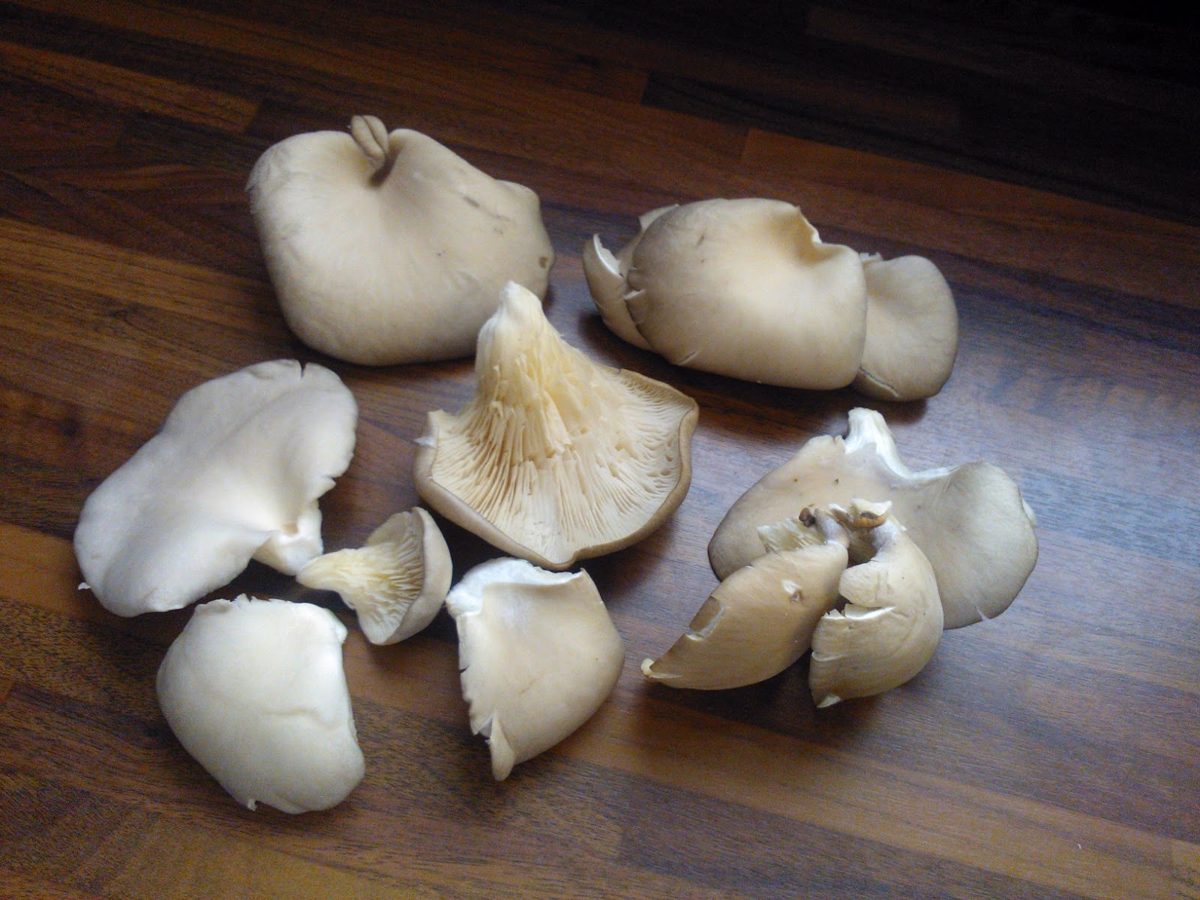
Oyster mushrooms – medicinal fungi
Their protein is 70% digestible, and they contain plenty of unsaturated fatty acids. Unlike forest mushrooms, they are rich in vitamins and minerals. They contain the full set of B vitamins and vitamin C (a 100 g portion covers 15% of the daily requirement). They are rich in calcium, iron, magnesium, phosphorus, potassium, selenium, sodium and zinc.
Japanese scientists are studying an oyster mushroom extract containing the active substance pleuran for its effect on immunity, and Slovak researchers have isolated from oyster mushrooms beta-glucan – a compound that supports the immune system. These are interesting lines of research, but oyster mushrooms are above all a healthy part of the diet, not a medicine.
When oyster mushrooms are eaten regularly, cholesterol levels fall, blood sugar levels drop in people with diabetes, and the condition of the blood vessels improves in people with arteriosclerosis. Oyster mushrooms contain ergothioneine – an antioxidant that protects cells from damage and ageing.
They do not lose this compound even during cooking. Thanks to these remarkable nutritional qualities and beneficial effects on the body, they are classed as medicinal mushrooms.
Oyster mushrooms in the kitchen
Oyster mushrooms are not as aromatic as forest mushrooms. The tastiest are the smaller caps (older ones are tough). Once cooked, they can be used in salads and soups, as a filling for pancakes or dumplings, or added to an omelette. My favourite is to fry them in butter with onion (possibly with a little melted blue cheese) as a topping for pasta or grains.
Oyster mushrooms can be frozen, dried and pickled. Dried stems are good for enriching the flavour of minced meat or sauces. They are exceptionally delicate mushrooms, so wash them carefully (and quickly, or they will soak up water). If you want the caps whole, it is best to choose them packed in a basket or on a tray, as they are fragile and break easily.
Source: www.poradnikzdrowie.pl
This season I have an ambitious plan to grow my own oyster mushrooms outdoors, starting back in March. Ready-made substrates on good-quality straw can be bought in specialist shops. Place the bale in a shady spot sheltered from the wind (under trees or shrubs). A small greenhouse, cold frame or polytunnel are also very good places, but they need to be shaded. The mycelium grows at temperatures of 10–30°C (fastest at 25°C). Depending on conditions, the mycelium colonises the substrate within a few weeks to a few months. Once the straw is fully colonised, the first fruiting bodies may appear within a couple of weeks. Over 3–5 months the mushrooms appear periodically, with shorter or longer breaks. During cropping, keep the air around the bags very humid (under a polytunnel). After 3–5 months the straw is completely exhausted and the oyster mushrooms stop cropping.
You can start growing them from March to October inclusive. Frost and snow do not threaten a properly established crop.
This article is for information and education only and does not replace medical advice. Please consult a doctor about any health problem. Legal notice.