In the Odyssey, Homer called the celery root "selinon" – magnificent. Old songs praised celery as a wonderful aphrodisiac able to kindle the flames of love. Old guides said of it that it "gives men vigour and kindles mischief" and also "makes women wanton".
The ancient Greeks and Romans grew celery as an ornamental plant. They also believed that the celery root brought good luck and even hung it above the doors of their homes, hoping it would give them excellent health, fitness and beauty.
In medieval Europe celery was grown in small quantities and regarded as a luxury vegetable, so it appeared only on the tables of the wealthy and in monasteries. In the 18th century it reached Russia, but the courtiers of Catherine II, imitating the Greeks and Romans, grew it for decorative purposes for a long time and adorned themselves with wreaths of its leaves at lavish dinners. Only at the end of the 18th century did growing celery become more popular. People then noticed the value of the celery root and discovered that it was exceptionally aromatic and delicate in taste. Numerous varieties with specific characteristics began to be developed. Today the most common is celeriac, with its thick, fleshy root. Leaf and stalk celery are also grown.
Celery is a biennial plant. In its first year it produces a fleshy, almost spherical root and many fine rootlets, and just above the ground a dense rosette of dark green, feathery leaves. In the second year a branched flowering stem grows, on which numerous whitish flowers bloom.
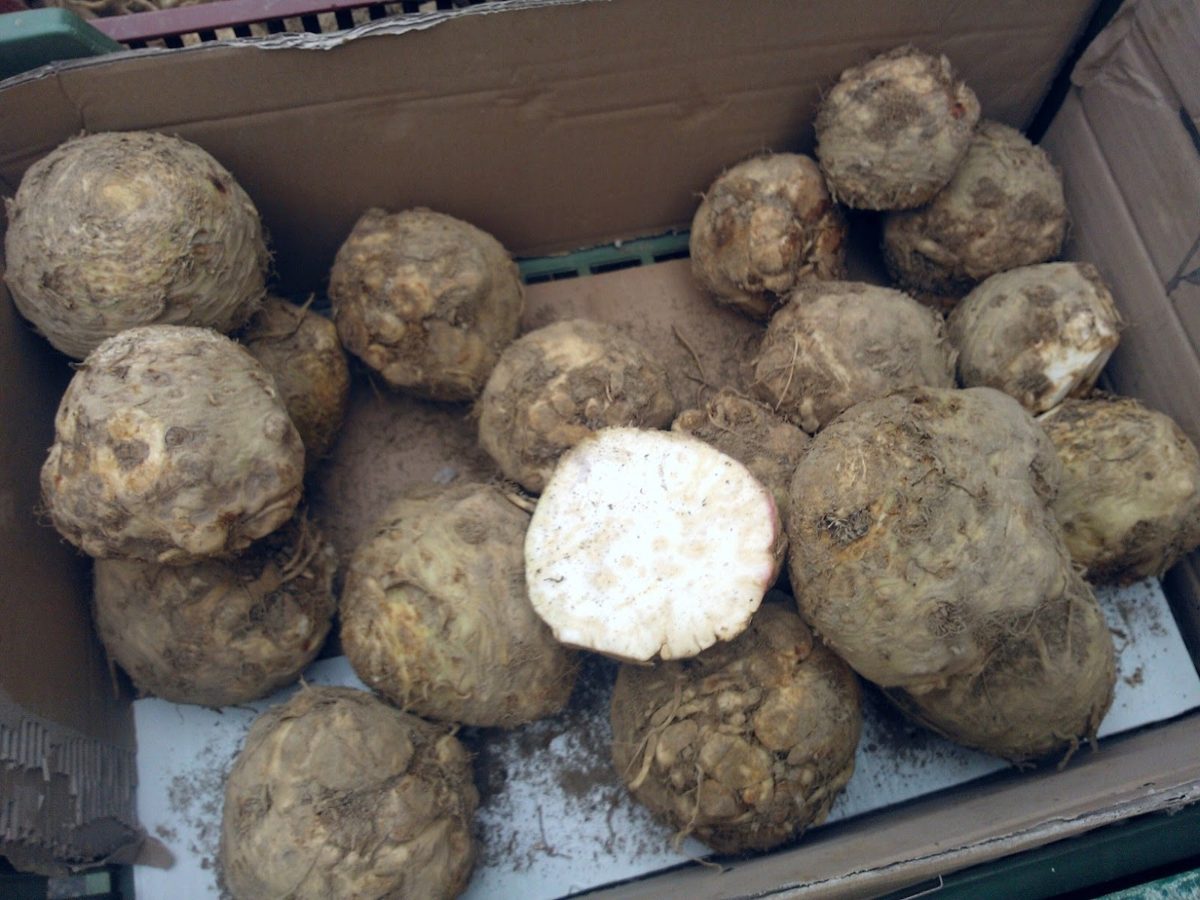
Celeriac contains the most phosphorus of all root vegetables, plenty of calcium, potassium and zinc, and some magnesium and iron. The roots contain protein, a range of amino compounds, flavonoids, organic acids, essential oil and vitamins B1, B2, B6, C, E and PP. Both the leaves and the leaf stalks contain significant amounts of vitamin C and provitamin A (beta-carotene). In France people still drink love potions whose main ingredient is celery juice. This vegetable effectively strengthens the immune system, cleanses the body of toxins and stimulates metabolism, which is why it is particularly recommended during convalescence after illness and in slimming diets.
In traditional Chinese and Vietnamese medicine, celery juice has been used for centuries to treat high blood pressure. The effectiveness of this old experience was recently confirmed by detailed research at the University of Chicago, where a completely new substance was discovered: 3-n-butylphthalide, which relaxes the smooth muscle of the blood vessels and causes a clear drop in blood pressure.
In Japan, anti-rheumatic celery cures, which involve eating as much celery as possible every day for a whole month, prepared in various ways, are very popular and reportedly effective.
Americans, in turn, like to drink stalk celery juice, regarding it as an almost universal remedy, particularly helpful in relieving the effects of stress and lifting the mood. It is recommended there especially for people overloaded with study and work, and for those who want to improve their concentration.
In France, celery is not only a popular and well-liked vegetable but also a very common home remedy. Juice is squeezed from crushed roots and drunk 3 times a day, a large wine glass at a time. It has a detoxifying effect, stimulates the appetite and counteracts constipation.
It is worth knowing that juice from fresh roots and leaves is also a very valuable dietary aid. It is especially recommended for excess weight (100 g of root contains very few calories). It has a revitalising effect on low libido and is used for an enlarged prostate and kidney stones. Compresses of grated celeriac soothe joint pain.
In folk medicine, a decoction of celery leaves and an ointment made from fresh roots are used externally on slow-healing wounds and ulcers. Celery baths are very helpful in treating frostbite. A decoction of the leaves is an effective remedy for hoarseness and runny noses, and combined with garlic it helps prevent atherosclerosis.
IN THE KITCHEN
(winter months)
Celeriac cutlets in pancake batter
Cook the celeriac in its skin until half-soft. Then peel it and cut into slices about 1.5 cm thick.
Prepare a pancake batter, ideally with spelt flour, 2 hours before frying. Dip the celeriac slices in the batter, sprinkle with sesame seeds and fry in hot olive oil.
Celeriac with apples in mayonnaise
Cook the washed and scrubbed celeriac, peel it and cut into thin slices. Slice raw apples as well. In a salad bowl, layer celeriac and apple alternately. Cover with mayonnaise and chill in the fridge for two hours before serving.
Cream of celeriac soup
300 g celeriac, half a portion of soup vegetables (carrot, parsley root, leek), a tablespoon of butter, 2 egg yolks, 1 litre chicken broth, 1/2 cup sour cream, 2–3 cups water, parsley, dill or herbes de Provence, salt to taste.
Cook the cleaned soup vegetables and the peeled celeriac, cut into small pieces, until soft. Press the soft vegetables through a sieve or blend them. Add the vegetable stock, broth and butter and heat almost to boiling, then remove from the heat. Pour the hot soup in a thin stream into the sour cream previously mixed with the egg yolks, stirring constantly. Serve immediately with croutons. Sprinkle with herbs or ready-made herbes de Provence.
Stuffed celeriac
4 small celeriacs, 150 g cooked meat, an onion, 2 tomatoes, 2 cups broth, 3/4 litre whipped cream, a tablespoon of chopped parsley, breadcrumbs, pepper and salt.
Clean, peel and rinse the celeriac, put it into boiling water and cook for about 20 minutes.
With a sharp knife, cut off the tops at 1/3 of their height. Hollow out the inside with a teaspoon, leaving walls about 1 cm thick. Dice the scooped-out flesh. Mix finely chopped onion with the chopped meat, breadcrumbs, tomatoes, celeriac flesh, salt and pepper.
Fill the hollowed-out celeriacs with this mixture, arrange them side by side in a pan, pour over the broth and braise slowly, covered, for about 20 minutes. Sprinkle with parsley before serving.
Celeriac with potatoes in mayonnaise
Made in the same way as with apples. In both cases you can lightly cover every two layers with mayonnaise or sprinkle with lemon juice, or with rose hip vitamin concentrate dissolved in water. You can decorate the salad with chopped herbs such as cress, parsley or chives.
Celeriac with lemon
Scrub the celeriac with a brush under running water, peel and grate it finely. Sprinkle with lemon juice, optionally add a little honey, and mix.
(recipes for the summer months)
Celeriac with sour cream or yoghurt
Grate the washed and peeled celeriac finely and immediately sprinkle with lemon juice or apple cider vinegar, because it darkens quickly. Mix with a tablespoon of sour cream or thick yoghurt (e.g. Greek-style). There is no need to salt the celeriac – if the dish has no other ingredients, it already contains plenty of minerals.
Celeriac with tomatoes
Wash and peel the celeriac, grate it coarsely and immediately sprinkle with lemon. Top with a tablespoon of sour cream or yoghurt and decorate with sliced tomatoes.
Celeriac with mayonnaise
Prepare the celeriac as above. Make mayonnaise: whisk an egg yolk until frothy and, pouring the oil with one hand, whisk continuously with the other (you can also blend the ingredients for 25 seconds). To avoid pouring in too much oil at once, cut a fairly wide, deep triangular notch in the cork – the oil will then flow out in a thin stream. After 5 minutes of whisking the mayonnaise will be ready. If it is too thick, thin it with sour cream, stock, lemon juice and so on. You can also make it spicy – not only salting it but also adding, for example, pepper or paprika to taste. Mix the grated celeriac with the mayonnaise, top with more mayonnaise and decorate with chopped cress, chicory or sprouts. This salad is very tasty, but quite fattening.
Celeriac with apples
Finely grate one small celeriac. Wash 2 medium apples and grate them coarsely, unpeeled. Very finely chop a handful (10 g) of chives and a coffee spoon (5 g) of fresh dill. Pour over the celeriac and apples two tablespoons of a solution made of water, sugar and rose hip concentrate (3 g). You can leave out the sugar if you use rose hip syrup (3 g).
This salad is also recommended as a dietary dish for people with liver disease. It can be served with mayonnaise, but then it is off-limits for people with liver problems.
Celery salad
Celeriac, stalk celery, 2 eggs, a tablespoon of chopped parsley, vinaigrette.
Clean, peel and rinse the celeriac under running water, cut into small cubes, then put into boiling water slightly acidulated with lemon. Cook for about 20 minutes and drain. Clean the stalk celery, discard the tough outer stalks, wash under running water and chop finely. Hard-boil the eggs, peel and chop them. Mix both kinds of celery and the eggs in a salad bowl with a few tablespoons of vinaigrette. Just before serving, sprinkle with parsley, dried cranberries or sprouts. Instead of vinaigrette you can use mayonnaise or olive oil mixed with lemon.
FOR HEALTH
For high blood pressure (a cure according to Agnieszka Barłogowa)
Put 2 large celeriacs through a juicer (you should get a glass of juice). Add 4 teaspoons of elderberry or cranberry juice to the celery juice. Drink 2 glasses of juice every day for 4 weeks. Then take a break, but include celery dishes in your diet.
For bloating
Pour a glass of boiling water over a tablespoon each of celery seeds and chopped fresh or dried parsley. Strain after 15 minutes. Drink after meals. It brings relief from intestinal colic and bloating and improves digestion.
For diabetes
Finely chop a celery stalk with its leaves and mix with a glass of yoghurt. Drink every day on an empty stomach (as a complement to treatment, not a substitute for it).
For hoarseness
Pour 1 litre of boiling water over 50 g of celery leaves, bring to the boil and simmer for 20 minutes. Strain. Divide into 4 portions. Drink 4 times a day before meals.
For colds and coughs
Cut a large hole in a cleaned celeriac, put in a teaspoon of sugar and leave overnight. In the morning, drink the syrup that has formed in the hole.
For bronchitis
Wash a large celeriac and grate it finely. Pour 1 litre of warm boiled water over the pulp and leave covered for 10 hours. Strain and drink ½ glass 4 times a day.
For rheumatism
Pour 2 glasses of boiling water over a tablespoon of fresh celery root, wrap the container in a towel or blanket and leave for 5 hours. Strain. Take ¼ glass 3–4 times a day, 30 minutes before meals.
For rheumatic and arthritic complaints
Pour 1½ litres of boiling water over 2 large or 3 medium celeriacs and heat over a low flame for 20 minutes. Strain. Divide the liquid into 5 portions and drink over the day – the first on an empty stomach, the last just before bed.
For sand and stones in the urinary tract
Drink a glass of freshly squeezed celery juice 3 times a day, an hour before meals. You can sweeten it with honey.
For excess weight
Drink ½ glass of freshly squeezed celery juice every day on an empty stomach.
For frostbite
Put 250 g of celery stalks into a litre of water and boil for 30 minutes. Strain. Dip gauze in the hot liquid, wring it out and apply to the affected area. Hold for 10 minutes, then repeat – 4–5 times in all. If the liquid cools, warm it up again.
Boil ½ kg of celeriac with stalks in 3 litres of water for 20 minutes. Strain and add the liquid to a bath. Take the bath twice a day for 15 minutes.
For purulent ulcers
Melt a block of butter in a frying pan and add a handful of washed, finely chopped celery leaves. Heat, stirring, until the fat foams. Then strain through gauze, squeezing the leaves. Use the celery butter for compresses.
FOR BEAUTY
Beauty salad (in the summer months)
Finely grate a piece of washed celeriac, mix it with 2 tablespoons of olive oil and eat every day as a snack – for example instead of a mid-morning meal. It will improve your complexion and strengthen your nails.
Celery toner
Squeeze a glass of juice from celeriac, add 1/4 glass of dry white wine and pour into a small bottle. Keep in the fridge. Wipe congested, blemish-prone skin with the toner several times a day.
Celeriac mask for oily skin
Grate 1/2 a washed celeriac, add the white of 1 egg and a tablespoon of milk, and mix. Apply to the face and neck. Rinse off after 20 minutes with boiled water.
Mask for dry skin
Grate 1/2 a washed celeriac, add a tablespoon of sour cream and a teaspoon of almond oil. Mix and apply to the face and neck. Rinse off after 20 minutes with boiled water.
Anti-dandruff rinse
Simmer a handful of celery leaves in a litre of water over a low heat for 20 minutes and strain. Add the same amount of a decoction (prepared the same way) of walnut shells (for dark hair) or chamomile (for fair hair). Rinse your hair with the liquid after washing.
Compresses for tired, red eyes
Put 1/2 teaspoon of finely grated celeriac onto cosmetic pads or gauze moistened with cool, strong black tea and place on the eyelids for 20 minutes. Then rinse your eyes with cool boiled water.
http://www.naturaity.pl
This article is for information and education only and does not replace medical advice. Please consult a doctor about any health problem. Legal notice.