A treasure of folk medicine.
Cabbage comes from the Mediterranean region. It is valued for its health benefits, taste and low calorie content (100 g contains only 29 kcal). Sweet cabbage and cabbage soup cooked without meat or fat turn out to be a remarkable slimming aid.
The B vitamins it contains, together with vitamins C, PP, K and U (the so-called anti-ulcer vitamin), sulphur compounds, fibre and enzymes, stimulate digestion and effectively cleanse the body of metabolic waste and toxins. Light, easily digestible cabbage dishes will help you take better care of your health and figure.
The tastiest cabbage has firm, heavy heads, because its leaves are delicate and juicy. The inner leaves of good-quality cabbage are white with thin veins, sweet and tender. Heads with thick leaves and thick veins are bitter, as they contain a lot of pungent oils.
Cabbage was cheap and widely available, but it appeared on village tables above all because it was very healthy. Every housewife knew this, though perhaps not how much it really benefits the human body. Cabbage was eaten several times a week in various forms, and sauerkraut juice was refreshing and tasty. Everyone felt good after eating it and did not fall ill.
Crushed leaves were applied to sore spots, ulcers, boils and slow-healing wounds, because they helped the patient recover. Leaves were also placed on the face to make the skin smoother.
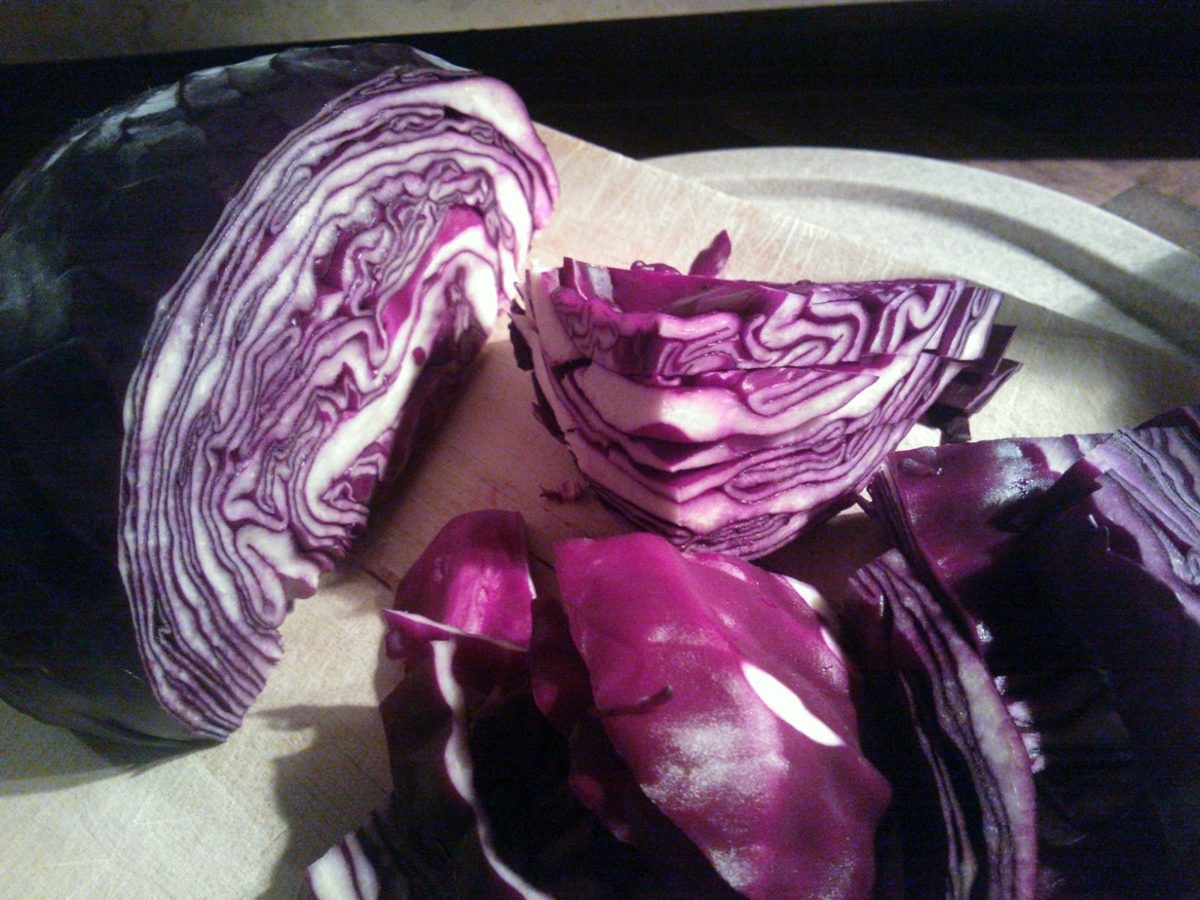
Cabbage leaves save a leg
Cabbage has held an important place in folk medicine for centuries, and some of its uses are still surprising today.
In the 19th century, Dr H. Blanc, a doctor working at the French hospital in Romans in the Drôme, used cabbage leaves to treat the slow-healing post-traumatic leg wounds of a young patient who was facing amputation. The medical council was determined to operate, but Dr Blanc asked for a delay of a few hours. He wrapped the leg in crushed cabbage leaves. Soon the fever subsided, the boy slept through the night, and in the morning he found that he could move his leg. When the leaves were removed, it turned out that they had drawn out and absorbed an incredible amount of pus. The compresses were continued, and after a few days the wound was clearly healing and scarring over.
This event opened a new chapter in the use of cabbage leaves to treat ulcers and slow-healing wounds. Dr Blanc began medical experiments with cabbage leaf compresses for dermatitis and skin irritation, gangrene and cuts, infected wounds and bites, smallpox, rubella and shingles.
Compress
Wash fresh, outer, dark green cabbage leaves thoroughly and cut off the thick ribs so that the leaf is flat. Then roll the leaves fairly firmly with a bottle or rolling pin so that they soften and release some juice. Warm them in hot but not boiling water. Place several leaves on the affected area and bind them fairly tightly with a bandage. Change the dressing once a day, in the morning or evening.
Compresses made from properly prepared cabbage leaves can be used on all kinds of infected wounds, boils, purulent inflammation, pustules, rashes and bruises, as well as on burns, eczema, cold sores, acne and frostbite. They soothe the inflammation of chickenpox, rubella and shingles. Compresses are also effective in bronchitis, painful periods and even inflammation of the uterus. When we suffer from headaches, we place a few leaves on the forehead and the back of the neck for two or three hours. You can also apply a compress overnight. Cabbage leaves also relieve toothache. They are also worth using for rheumatic pain, but in that case boil a few leaves for twenty minutes with two onions and a tablespoon of bran in a very small amount of water, letting it slowly evaporate. Place everything on gauze, wrap it up and apply it warm to the painful spot. Remember: the fresher the leaves, the more effective they will be.
The effects of fresh cabbage juice
Fresh cabbage juice has an equally effective healing action. It is best made with a juicer and drunk immediately after straining.
It is used very effectively for stomach and duodenal ulcers, for gastritis with low stomach acid and for colitis. It inhibits the growth of polyps in the colon thanks to its sticky plant mucilage, sulphur and potassium salts.
For inflammation and stomach ulcers, prepare a few cups of juice in the morning and drink it before every meal for at least 21 days. The juice should be warm.
For anaemia, it is worth drinking a larger dose – regularly one to two glasses a day.
For lung and respiratory diseases, coughs, runny noses and hoarseness, drink fresh cabbage juice enriched, for example, with honey. For throat complaints, gargling with fresh juice cleanses the throat and soothes inflammation.
The syrups developed by Dr Blanc are very effective.
For the first, you need 1/2 litre of filtered fresh white or red cabbage juice, 3 g of saffron, and 1/4 kg each of honey and sugar. Boil the honey and sugar into a thick syrup and let it cool slightly. Then add the remaining ingredients and mix well. Dissolve one tablespoon of the syrup in boiled water and drink three to four glasses a day.
The second requires fewer ingredients:
boil 1/4 litre of filtered white cabbage juice with 1/2 kg of sugar until it thickens. Dissolve the resulting syrup in half a glass of boiled water.
Source: http://www.naturaity.pl
This article is for information and education only and does not replace medical advice. Please consult a doctor about any health problem. Legal notice.